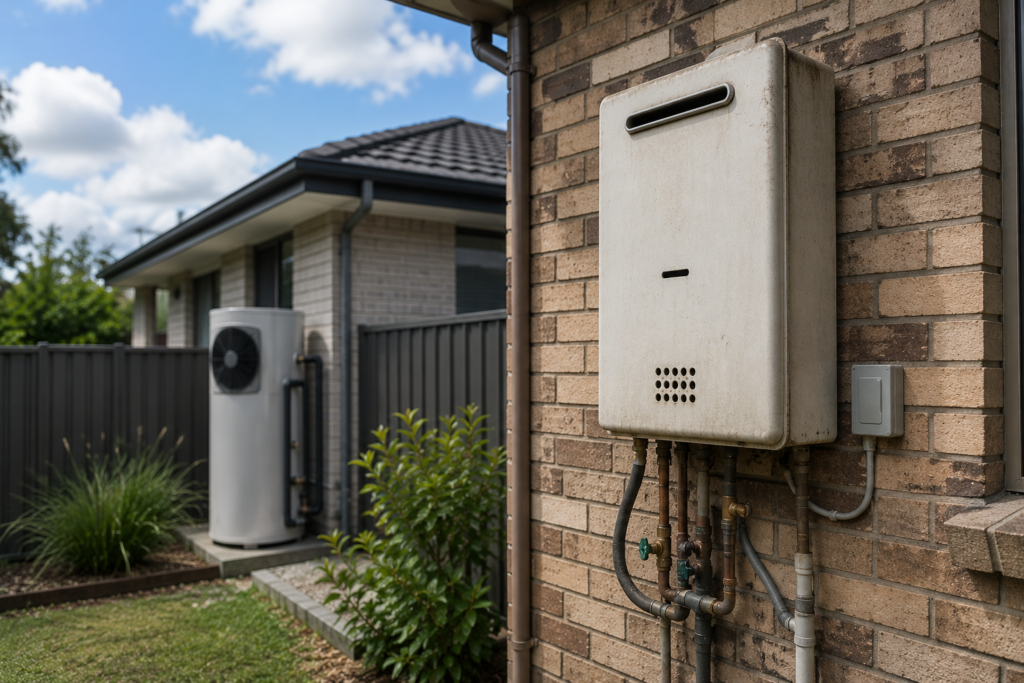
If your gas hot water system has been ticking along fine for the last decade, it’s easy to assume nothing’s changing. No one’s knocking on doors telling homeowners to rip out their gas systems, and there’s no statewide deadline circled on a calendar. But underneath that, the ground is shifting, and it’s worth understanding before your system’s next repair — because that repair might not look the same as the last one.
There’s No Blanket Ban, But the Direction Is Clear
Let’s deal with the headline first, because it’s easy to get wrong. NSW hasn’t announced a statewide ban on gas hot water systems in existing homes. If your system is working, nobody is coming to switch it off. What has changed is narrower but still significant: some local councils, including the City of Sydney, have moved to restrict new gas connections for new residential and commercial builds within their boundaries. That’s a ban on new gas hookups in specific areas, not a retrofit mandate for homes that already have gas.
So why does a title like this one keep showing up? Because policy is only one part of the story. The bigger shift is happening in manufacturing, rebates, and trade priorities, and those three things affect your wallet well before any government mandate would.
Why Repairs Are Getting More Complicated (and Pricier to Sort Out)
Here’s the part that actually matters for someone with a gas system right now. As government incentives, energy policy, and manufacturer investment tilt further toward electric and heat pump technology, gas hot water is quietly becoming the less-supported option, even without a formal ban.
A few things are happening at once:
Parts availability is tightening. Manufacturers are putting less R&D and stock into gas water heater lines and more into heat pump and electric ranges. For older gas systems, this can mean longer wait times for specific components, or a plumber having to source a compatible part rather than an exact match.
Fewer new tradespeople are specialising in gas hot water servicing. Apprentices and younger tradespeople are being trained heavily around the systems that are actually growing in demand. Gas hot water knowledge doesn’t disappear overnight, but the pool of technicians who service it regularly is shrinking relative to those trained on heat pumps and electric units.
Rebates and incentives skew the maths. Various NSW and federal incentive schemes currently favour heat pump and solar hot water installations, sometimes significantly reducing the upfront cost of switching. That doesn’t make your gas system illegal or immediately unusable, but it does change the calculation every time a repair comes up. A repair that once made obvious financial sense can start to look less clear-cut once you factor in what an incentivised replacement would cost by comparison.
Insurance and building compliance conversations are shifting too. Some strata bodies and larger property managers are already reviewing gas infrastructure as part of broader energy efficiency planning, particularly in Sydney’s inner suburbs where local gas restrictions already apply to new builds. If you’re in a body corporate, it’s worth checking whether any of this is being discussed at a building level, because it can affect what happens when a shared or building-wide gas hot water system fails.
None of this means your gas system is suddenly worthless or unsafe. It means the surrounding ecosystem — parts, tradespeople, incentives, and long-term support — is gradually reorganising itself around electric and heat pump systems. And that reorganisation shows up first in how straightforward (or not) your next repair turns out to be.
What This Actually Means When Your System Needs Attention
When a gas hot water system develops a fault, there are really three paths available, and which one makes sense depends on the age of the unit and the nature of the fault.
Minor, common faults — a faulty thermocouple, a pilot light issue, a sensor fault — are usually still straightforward. These are well-understood problems with parts that remain widely available, and a qualified plumber can usually resolve them in a single visit without much fuss.
Bigger structural faults, particularly in older tanks, are where the calculation gets more interesting. If a system is already past the point where most units of that age start failing, and the fault is something significant like a tank leak or a major component failure, it’s worth having a plumber walk you through both options rather than assuming a repair is automatically the cheaper or smarter path. Sometimes it still is. Sometimes, once you factor in available incentives, it isn’t.
End-of-life systems are the clearest case. If a unit is old enough that a repair is essentially buying a small amount of extra time, most plumbers will say plainly that a replacement is the more sensible long-term move, gas restrictions or not.
The honest answer is that a competent plumber should be assessing all of this on the day, not pushing a particular outcome. The point of understanding the broader shift isn’t to panic about your existing system. It’s to know that “just repair it” isn’t always the automatic no-brainer it used to be, and it’s worth asking a few extra questions before signing off on any quote.
What Homeowners Should Actually Do
If your gas hot water system is running fine, there’s no need to do anything right now. But it’s worth keeping a few things in mind as you go:
- Ask your plumber directly whether parts for your specific model are still readily available, especially if your system is older than ten years.
- If a repair quote comes back higher than expected, ask whether that’s due to the fault itself or difficulty sourcing the part — it’s a fair question, and a good tradesperson won’t mind being asked.
- If you’re due for a bigger repair or your system is nearing the end of its expected lifespan, it’s worth getting an opinion on both repair and replacement, so you’re not deciding under pressure with your hot water already out.
- Keep an eye on any changes at a local council level if you’re in an area that already restricts new gas connections, since local rules can shift faster than state-level policy.
Gas hot water isn’t disappearing from NSW homes overnight, and nobody’s coming to disconnect a working system. But the landscape around it is thinning out in ways that quietly affect cost, availability, and how straightforward repairs are going to be over the next few years. Understanding that now means fewer surprises the next time something goes wrong.
If you’re dealing with a gas hot water fault and want a straight answer on repair versus replacement, WSG Group services hot water systems across Sydney and the Central Coast, including gas, electric, and heat pump units, and can talk through what actually makes sense for your specific system.