Ask almost anyone whether they get enough fiber in their diet, and most will pause before answering. There’s a general sense that it matters, tucked somewhere next to drinking more water and getting enough sleep, but the actual number of grams eaten in a day rarely gets tracked. The result is a pretty wide gap between what people intend to eat and what actually lands on the plate.
That gap isn’t really about willpower. It’s about habit and convenience. Fiber-rich foods tend to require a little more thought than the alternatives sitting right next to them on a grocery shelf, and when the week gets busy, the easier option usually wins. The good news is that closing this gap doesn’t require an overhaul. It mostly comes down to picking a handful of foods that are easy to keep on hand and easy to fold into meals that already exist in a normal rotation.
Why Fiber Keeps Coming Up
Fiber gets mentioned constantly in health conversations for good reason. It plays a direct role in digestion, helping keep things moving through the gut in a way that prevents discomfort and supports regularity. It also has a steadying effect on blood sugar, since fiber slows down how quickly the body absorbs sugar from a meal, which helps avoid the sharp spike-and-crash pattern that leaves people reaching for a snack an hour later.
There’s also the fullness factor. Fiber adds bulk to meals without adding a proportional amount of calories, which means a fiber-rich plate tends to leave people satisfied for longer stretches than a meal built mostly around refined carbohydrates. For anyone trying to manage weight, energy levels, or simply avoid the mid-afternoon slump, that steadier fullness matters more than most people give it credit for.
Despite all of that, most adults still land below the recommended range, which generally falls somewhere between the mid-twenties and mid-thirties in grams per day depending on age and activity level. Closing that gap is less about a dramatic diet change and more about swapping in a few reliable foods on a regular basis.
Start the Day with Something That Holds Its Own
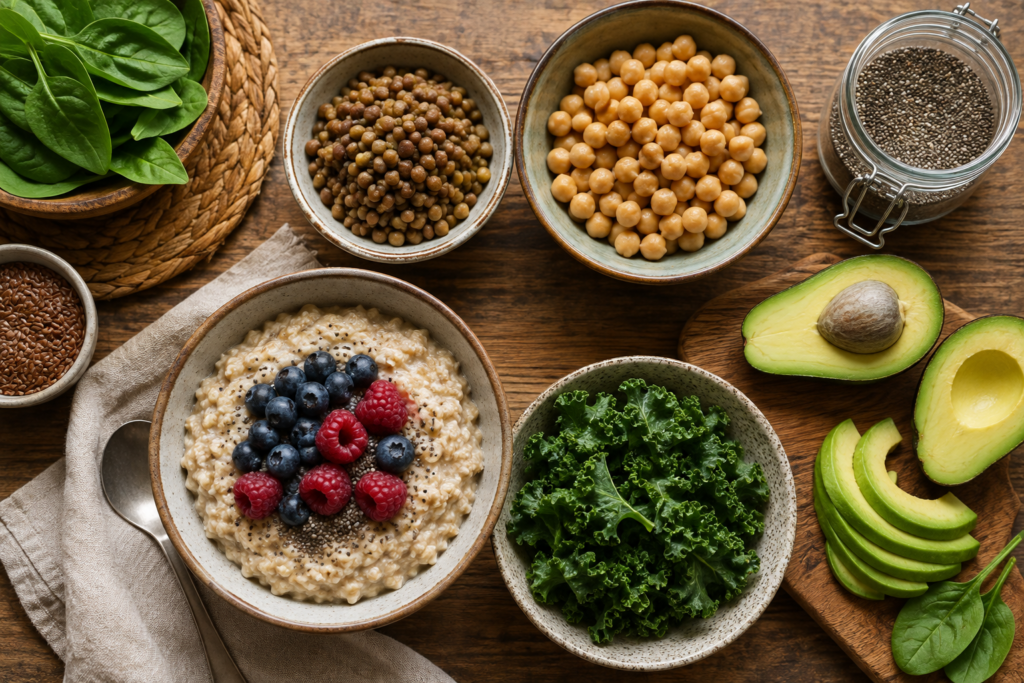
Breakfast is often the easiest meal to fix first, mostly because it tends to be the most repetitive one. A bowl of plain oats, cooked with water or milk, brings a meaningful amount of fiber to the table before the day even gets going. The particular kind of fiber found in oats is worth noting too, since it forms a gel-like consistency in the digestive tract that helps slow down how quickly the stomach empties, which is part of why a bowl of oatmeal tends to keep hunger away longer than a bowl of cereal made from refined grain.
Topping oats with a handful of berries adds even more fiber without much extra effort, and the natural sweetness usually removes any need for added sugar. For anyone who finds plain oats boring, a spoonful of nut butter or a sprinkle of cinnamon goes a long way without undoing any of the benefit.
Let Legumes Do the Heavy Lifting
If there’s one category of food that delivers more fiber per bite than almost anything else in a typical kitchen, it’s legumes. Lentils, beans, and chickpeas all pack a substantial amount of fiber into a single serving, and they come with the added benefit of protein, which makes them genuinely filling rather than just bulky.
The practical advantage of legumes is how well they absorb other flavors. A pot of lentils takes on the character of whatever spices, broth, or vegetables it’s cooked with, which makes it easy to drop into soups, stews, and grain bowls without needing a separate recipe. Canned versions, rinsed well, cut prep time down to almost nothing and still carry most of the same fiber content as the dried version cooked from scratch.
Small Seeds, Real Impact
Chia and ground flaxseed rarely get top billing in a meal, but they earn their place through sheer efficiency. Both are small enough to blend into almost anything without changing the texture or flavor of a dish in a noticeable way, yet a couple of tablespoons carries a real amount of fiber.
Chia seeds have a particular trick: dropped into a liquid, they swell up and take on a gel-like texture, which makes them useful for thickening smoothies or turning a bowl of plant milk into an overnight pudding with almost no effort. Flaxseed tends to work best ground rather than whole, since the body has an easier time accessing the fiber and nutrients that way. A spoonful stirred into a sauce, a bowl of yogurt, or a pot of soup disappears completely while still doing its job.
A Crunchy Alternative to Empty Toppings
Salads and grain bowls often lean on crunchy toppings for texture, and croutons or store-bought crackers are the usual default. Roasted chickpeas make a solid substitute, offering the same satisfying crunch with a fraction of the empty calories and a real fiber contribution instead of none at all.
The process is simple enough to repeat weekly: toss cooked chickpeas in a bit of oil and seasoning, then roast until crisp. A single batch holds its texture for several days, which makes it one of the easier fiber additions to prep once and use across multiple meals.
Round Out the Plate with Greens and Healthy Fat
Leafy greens like kale and spinach contribute a meaningful amount of fiber on their own, and pairing them with a source of healthy fat, like avocado, does more than just taste good together. The fat actually helps the body absorb certain nutrients found in the greens more effectively, which makes the combination more useful than either food eaten on its own.
This pairing works as a simple side dish, the base of a salad, or folded into a wrap, and it adds volume to a plate without adding much in the way of calories. For anyone trying to eat more vegetables without feeling like they’re forcing it, this combination tends to feel more like a genuinely enjoyable meal component than an obligation.
Making It Stick Week to Week
The foods above share one thing in common: none of them require a specialized recipe or a big shift in how meals get put together. That’s really the key to making a fiber increase last beyond a single motivated week. Trying to overhaul an entire diet at once tends to fall apart quickly, while swapping in one or two fiber-rich foods at a time, into meals that already happen regularly, tends to hold up far better over the following months.
It’s also worth remembering that fiber works best alongside enough water. As fiber intake goes up, so does the amount of water needed to help it move through the digestive system comfortably. Skipping that part is a common reason people feel bloated or uncomfortable after increasing fiber too quickly, and it’s an easy fix once it’s on the radar.
None of this requires tracking grams on a spreadsheet or memorizing a chart. It just means keeping a few reliable ingredients stocked and rotating them into meals that already fit into a normal week. Over time, the small additions add up to a meaningfully different plate, without ever feeling like a diet in the restrictive sense of the word.