There’s a very specific kind of denial that comes over people when a drain starts running slow.
You notice the water pooling a little longer in the shower. The kitchen sink takes a few extra seconds to empty. And instead of calling someone, you pour in half a bottle of drain cleaner, wait ten minutes, and convince yourself it’s sorted.
A week later, you’re standing in two inches of water wondering how it got this bad.
If you own a home — particularly an older one across Sydney’s North Shore, Northern Beaches, or the Central Coast — this probably sounds familiar. Blocked drains are one of the most common calls tradies get, and they’re also one of the most commonly ignored household problems until the situation gets genuinely unpleasant.
Here’s what most people don’t know: by the time your drain is fully blocked, the problem usually isn’t new. It’s been building for months.
What’s Actually Going On Inside Your Pipes
Most residential drain blockages don’t happen overnight. They develop gradually, and there are a few culprits that come up again and again.
Grease and fat buildup is the number one cause of kitchen sink blockages. Every time you pour cooking oil, bacon grease, or fatty water down the sink, it doesn’t just wash away. It cools and solidifies on the walls of the pipe, slowly narrowing the passage over time. Eventually — sometimes after years — enough builds up to cause a proper blockage.
Hair and soap scum is the usual villain in bathroom drains. Hair doesn’t break down in water, and when it combines with soap residue, it forms dense clumps that catch on pipe joints and trap everything else that comes along.
Tree roots are a bigger problem than people expect, especially in older suburbs where large established trees are growing near underground pipes. Tree roots actively seek moisture, and even a hairline crack in a clay or concrete pipe is enough of an invitation. Once roots find their way in, they grow quickly and can cause significant damage — not just blockages, but cracked and collapsed sections of pipe.
Foreign objects — especially in homes with young children — account for more callouts than you’d think. Toys, wipes (even “flushable” ones), cotton buds, and all sorts of other things end up in places they shouldn’t.
The tricky part? You can’t tell which of these you’re dealing with from the surface. What looks like a simple slow drain could be a grease buildup you can clear yourself — or it could be a root intrusion that’s compromised a 10-metre section of pipe under your front yard.
When to Stop Ignoring It
There are a few signs that separate a drain that’s mildly inconvenient from one that needs attention today:
Multiple drains backing up at the same time. If your shower, toilet, and laundry drain are all running slowly or gurgling together, the blockage is likely in your main sewer line — not just an individual fixture. This is urgent.
Gurgling sounds coming from drains you’re not using. When air is being pushed through partially blocked pipes, you’ll often hear it as gurgling in other parts of the house. Pay attention to this one.
Water backing up into a different fixture. You flush the toilet and water comes up in the shower. This is the drain equivalent of a red flag on fire. Call someone the same day.
A bad smell that won’t go away. Persistent sewer smell from a drain, even when it seems to be draining okay, usually means there’s stagnant water sitting somewhere in the line — or a partial blockage that’s starting to ferment. Not pleasant, and not something that fixes itself.
Any single one of these is worth a professional look. If you’re seeing two or more, don’t delay.
What a Good Local Tradie Will Actually Do
There’s a significant difference between someone who clears the immediate blockage and someone who actually solves the problem.
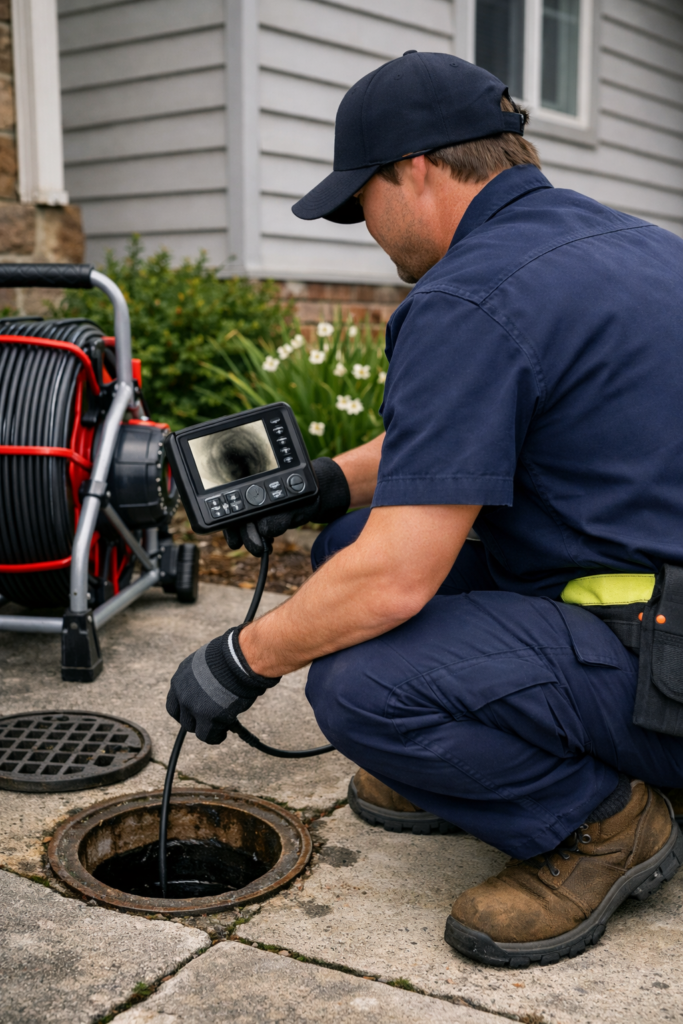
The first thing a reliable drain specialist should do is diagnose before they start clearing. That typically means a CCTV drain inspection — running a small waterproof camera through your pipes to see what’s happening inside. This isn’t an upsell; it’s genuinely the only way to know whether you’re dealing with a surface-level buildup or something structural.
Once they know what they’re dealing with, the clearing method matters. High-pressure water jetting is the most thorough way to clear grease, debris, and minor root intrusion — it cleans the pipe walls rather than just punching a hole through the blockage. For more serious root intrusion or pipe damage, you may need pipe relining or a section replacement.
What you don’t want is a quick snake job that clears the immediate blockage without addressing the cause. You’ll be back in the same situation in a few months, sometimes sooner.
Why Using a Local Tradie Makes a Real Difference
There are a lot of national franchise operations and call centres that will send someone to your door. And sometimes they’re fine. But there’s a real practical advantage to finding a tradie who actually operates in your suburb and services your local area regularly.
They know the pipe infrastructure. Older homes in areas like Beecroft, Artarmon, or Balgowlah Heights often have clay or concrete pipes that are more susceptible to root intrusion and cracking. A tradie who works that area regularly has seen the patterns, knows what to look for, and isn’t going in blind.
They’re also easier to reach when something goes wrong after the job. A local operator with a real presence in your community has a reputation to protect. If the problem comes back a week later, they’re much more likely to come back out and look at it properly — not disappear behind a call centre queue.
This is exactly the kind of thing a directory like SaveLocal is useful for. Rather than just Googling and hoping for the best, you can search by your specific suburb and find a business that actually operates in your area, holds the relevant NSW trade licences, and comes backed by a network that vets who it lists.
A Few Things Worth Doing Right Now
Even if you’re not dealing with an active blockage, there are a few habits that make a noticeable difference over time:
Install a drain strainer in your shower. They’re a few dollars, they catch hair before it goes down the pipe, and they genuinely work. Clean it out every week or two.
Don’t put fats or cooking oil down the sink. Let them cool in the pan, scrape them into the bin, then rinse the pan with hot water. It takes ten extra seconds and saves you a callout.
Be particular about what goes down the toilet. Only toilet paper, nothing else — regardless of what the packet says. “Flushable” wipes do not actually break down the way toilet paper does, and they’re one of the primary causes of sewer main blockages across NSW.
Book a drain inspection if your home is older. If you’ve moved into a property built before the 1980s and you’ve never had the pipes checked, it’s worth a CCTV inspection just to know what you’re working with. Tree root intrusion and deteriorating clay pipes are both things you’d rather know about on your terms, not when they fail.
A blocked drain is rarely just a blocked drain. It’s usually a symptom of something that’s been developing for a while — and the sooner you deal with it properly, the cheaper and less disruptive it is.
The right local tradie, someone who knows your area and will actually diagnose the problem rather than just clear it, is worth finding before you need one urgently. That’s what SaveLocal is there for.
This is a guest contribution. SaveLocal is a local tradie directory connecting NSW homeowners with licensed, vetted trade businesses across 214 suburbs in Sydney, the Central Coast, and Newcastle.