There’s a moment every homeowner dreads — standing at the kitchen sink, watching the water just sit there, refusing to go anywhere. Or stepping into the shower and realising you’re ankle-deep in grey water before you’ve even shampooed your hair. It starts small. A slow drain. A gurgling noise after you flush. A faint, unpleasant smell drifting up from somewhere below the floor.
Most people ignore it. Life is busy, and a slow drain doesn’t feel like a crisis. But here’s the thing — by the time a blocked drain announces itself loudly enough to get your attention, it’s usually been building for weeks or months underneath your home. And what began as a minor nuisance can turn into a burst pipe, a flooded bathroom, or a sewage backup that contaminates the subfloor.
If you’re a homeowner in Sydney, the Central Coast, or Newcastle, understanding blocked drains — what causes them, what the warning signs actually look like, and when to stop googling DIY fixes and call a licensed plumber — is one of the more practical things you can do for your home.
What Actually Causes Blocked Drains?
People tend to assume that blocked drains are caused by one dramatic event — someone flushing something they shouldn’t, or a single enormous clump of hair. But the reality is usually slower and more mundane.
Grease and fat build-up is one of the most common culprits in kitchen drains, and it’s almost entirely avoidable. When you pour hot cooking oil or bacon fat down the sink, it flows freely — but as it cools inside the pipe, it solidifies and sticks to the pipe walls. Layer by layer, over months and years, it narrows the passage until barely anything gets through.
Hair and soap scum in bathroom drains follow a similar logic. Hair tangles around the drain and forms a mesh that catches soap residue, skin cells, and everything else that washes down. What starts as a clump that could be pulled out by hand eventually compacts into something much harder to shift.
Tree root intrusion is a problem that catches Sydney homeowners off guard, especially in older suburbs where large trees have had decades to spread their root systems. Tree roots are drawn to the warmth and moisture of underground pipes and can find their way through the tiniest crack or join. Once inside, they grow and branch out, eventually blocking the pipe entirely or causing it to collapse.
Foreign objects and non-flushable items are exactly what they sound like. Baby wipes — even the ones labelled “flushable” — don’t break down the way toilet paper does. Neither do cotton pads, paper towels, sanitary products, or the small plastic lid that accidentally dropped into the toilet last Tuesday. These items travel partway through the system and then get stuck, particularly at pipe bends.
Structural pipe issues are more common in older homes. Clay pipes that were installed decades ago can crack, sag, or shift as the ground moves around them. When a pipe sags in the middle, it creates a low point where debris collects — called a “bellied pipe” — and no amount of clearing the blockage will fix the underlying structural problem.
The Warning Signs Worth Paying Attention To
One of the tricky things about drain blockages is that the early signs are easy to dismiss. Here’s what to watch for, and what each one might indicate.
Water draining slowly is the most obvious early signal. If your kitchen sink takes noticeably longer to empty than it used to, or your shower puddles water around your feet, something is restricting flow. It may not be a full blockage yet, but it’s heading there.
Gurgling or bubbling sounds after you flush the toilet or run the sink suggest that air is being pushed through water somewhere in the system — a sign that there’s a partial blockage further down the line creating pressure.
Unpleasant smells coming from drains, even faint ones, often indicate that organic material is decomposing inside the pipe. In the case of grease build-up, this can smell rancid. In the case of a sewer line issue, it will smell distinctly like sewage.
Multiple fixtures backing up at once is a more serious sign. If your toilet, shower, and basin all seem to be draining slowly at the same time, the blockage is likely in the main sewer line rather than an individual drain. This situation can escalate quickly.
Water pooling in the yard or a consistently wet patch of grass that doesn’t correspond to recent rain can indicate a cracked or broken underground pipe that’s leaking wastewater into the soil. This is not something to leave.
What DIY Can and Cannot Fix
There’s a reasonable amount a homeowner can do for a minor, surface-level blockage — and knowing the limit of that is important.
A sink plunger can sometimes shift a soft blockage close to the drain opening. A drain snake or drain auger, which you can hire from most hardware stores, can reach a bit further and break up a blockage in a short pipe run. Enzyme-based drain cleaners (not the harsh chemical variety) can help with light grease build-up if used regularly as a preventative measure rather than a cure.
What DIY cannot fix is anything structural, anything deeper in the system, tree root intrusion, or a collapsed pipe. It also can’t tell you what the problem actually is — which matters more than people realise. Clearing a symptom without knowing the cause just delays the next, usually worse, blockage.
Chemical drain cleaners are worth mentioning here because they’re a popular first response. While they can dissolve some organic material, they’re also highly caustic and can damage older pipes over time. They won’t touch a solid foreign object or tree root intrusion. And if a plumber has to follow up after someone has poured chemicals down a drain, it creates a safety issue for the technician working in that space.
What a Licensed Plumber Actually Does Differently
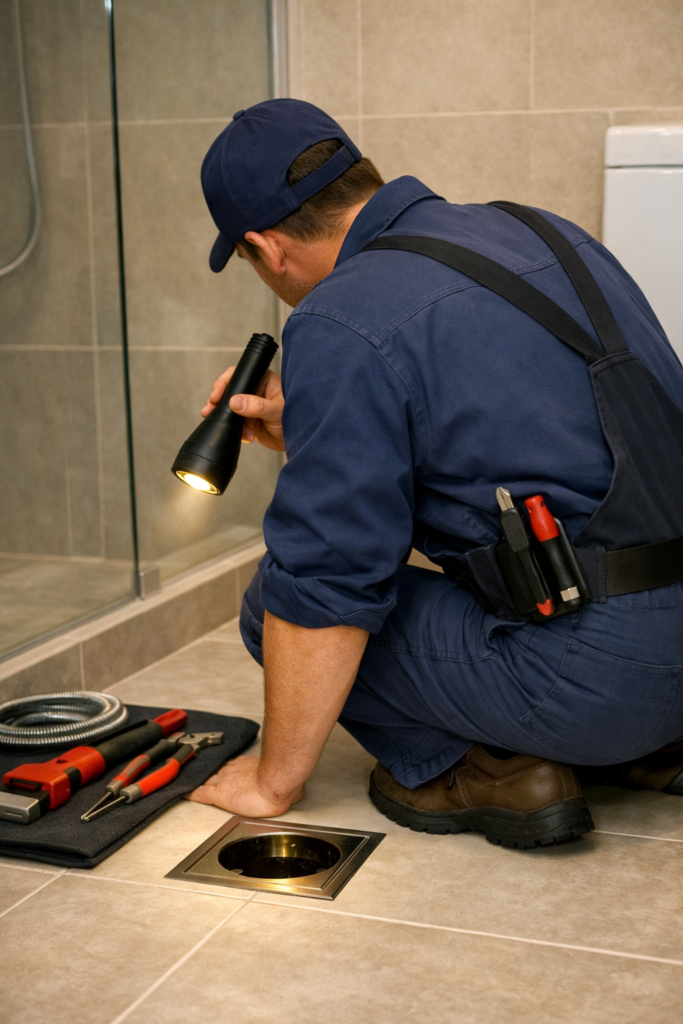
When a licensed plumber attends a blocked drain, the first step is usually diagnosis before treatment. This is where modern drain plumbing has changed significantly.
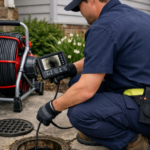
CCTV drain inspection involves passing a small waterproof camera through the pipe on a flexible cable, transmitting a live feed to a monitor. This tells the plumber exactly where the blockage is, what’s causing it, and what condition the pipe is in. It removes the guesswork entirely and means the right solution gets applied rather than the most convenient one.
Hydro jetting — also called high-pressure water jetting — uses a specialised nozzle that delivers water at extremely high pressure to scour the inside of the pipe. It clears not just the blockage but the grease and debris coating the pipe walls, restoring close to the original diameter. For stubborn build-up or recurring blockages, this is far more effective than mechanical clearing alone.
Pipe relining is a relatively recent technology that’s particularly useful for pipes that have cracked or partially collapsed. Rather than digging up and replacing the pipe — which is expensive, disruptive, and in some cases involves breaking through concrete or tiling — a flexible liner is inserted into the existing pipe and inflated against the walls, then cured in place. The result is essentially a new pipe inside the old one, with a smooth interior surface that resists root intrusion and build-up.
For full structural failures, pipe replacement is still sometimes necessary, but a CCTV inspection first means you know the actual scope of the work before any digging starts.
When to Call for Emergency Plumbing
Some situations don’t warrant a booked appointment — they need same-day attention.
If sewage is backing up into fixtures — especially if it appears in a bath or shower drain when you flush the toilet — this is a health hazard and needs to be treated as an emergency. Raw sewage contains bacteria and pathogens that pose genuine risks, particularly to children, elderly residents, and anyone with a compromised immune system.
If a pipe has burst or you can hear running water inside a wall or under the floor when no taps are open, turn off the water at the main stopcock and call a plumber immediately. Every minute of a burst pipe running is water damage accumulating somewhere in your home’s structure.
Severe flooding from a blocked stormwater drain after heavy rain can also cause structural damage quickly. Sydney and the Central Coast both see storm events that overwhelm poorly maintained stormwater systems — if you’re seeing water pooling near your house perimeter during heavy rain, it’s worth getting the stormwater drains inspected before the next downpour.
Preventative Steps That Actually Work
Prevention isn’t glamorous but it’s genuinely effective.
Fitting drain covers or hair catchers in bathroom drains and cleaning them every week takes about thirty seconds and dramatically reduces hair build-up. In the kitchen, wiping greasy pans with a paper towel before washing removes the majority of the fat before it ever reaches the drain.
Being strict about what goes down the toilet is more important than people assume. The only things that belong in a toilet are human waste and toilet paper — full stop. Every other product, however its packaging describes it, should go in the bin.
Getting a professional drain inspection every two to three years is worth considering if your home is older, if you have large trees nearby, or if you’ve had recurring blockages in the past. Catching a developing problem — a small root intrusion, a slightly sagging pipe section — before it becomes a full blockage or a pipe failure is substantially cheaper and less disruptive than dealing with the emergency version.
A Final Note on Choosing the Right Plumber
Not all drain clearing is the same, and not all plumbers approach it the same way. A good licensed plumber will want to understand the cause of the blockage, not just clear the immediate symptom. They’ll recommend a CCTV inspection when the situation warrants it. They’ll explain what they found and why they’re recommending a particular solution.
In New South Wales, plumbing work must be carried out by a licensed plumber — it’s not just best practice, it’s the law for most plumbing work. Licensed tradespeople are accountable to a professional standard, and the work is covered by statutory warranties.
If you’re based in Sydney, the Central Coast, or Newcastle and you’re dealing with a blocked drain — or you’ve noticed any of the warning signs above — getting it looked at sooner rather than later is almost always the right call. What’s a slow drain today has a way of becoming a sewage emergency at the worst possible moment.
This is a guest post written by TradeTek Solutions Team. The views and recommendations expressed are based on general home maintenance experience.