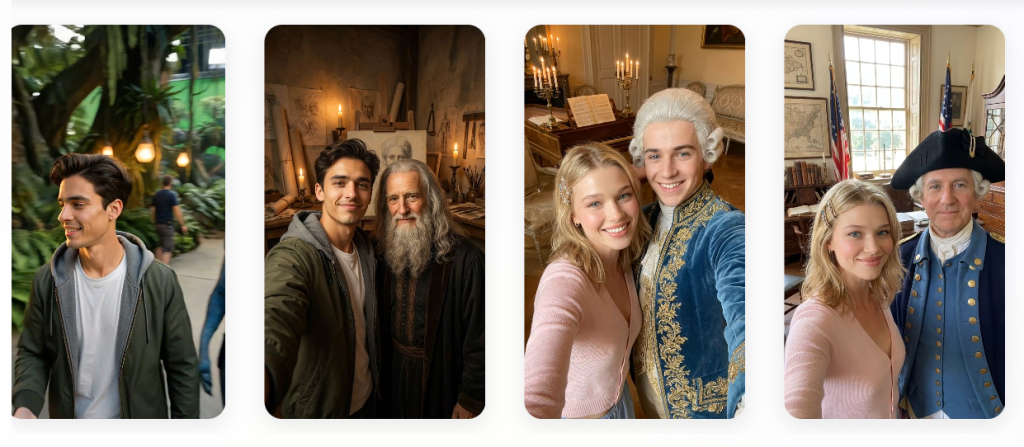
Scroll through social media today and you’ll notice something strange.
Celebrities are everywhere — but not always in real footage.
A famous actor casually recording a selfie video on a movie set they were never on.
A well-known star smiling into the camera as if they personally filmed it.
A behind-the-scenes moment that never actually happened.
And yet, it looks real enough to stop your scroll.
AI celebrity selfie videos have quietly become one of the most viral visual trends on the internet. What started as a novelty experiment has turned into a full-blown content format, shared across Instagram, TikTok, Reddit, and YouTube Shorts.
The surprising part is not just how realistic these videos are.
It’s how easy they’ve become to create.
How AI Made Celebrity Content Accessible
A few years ago, generating realistic celebrity videos required advanced deepfake knowledge, powerful hardware, and hours of training models. It was inaccessible to most people.
Today, AI tools have abstracted that complexity away.
Instead of coding or training models, creators now interact with AI using simple prompts. You describe the scene. You describe the motion. You describe the style. The AI fills in the rest.
This shift didn’t just lower the barrier to entry. It changed who gets to participate.
Fans.
Creators.
Marketers.
Meme pages.
Casual users.
Anyone with an idea can now visualize it.
Why AI Celebrity Selfie Videos Go Viral
There are a few psychological and cultural reasons this content spreads so fast.
First, celebrities already command attention. When people see a familiar face, their brain instinctively pauses.
Second, selfie-style framing creates intimacy. A celebrity holding a phone, looking into the camera, feels personal even if the moment is artificial.
Third, novelty matters. AI visuals still sit in that space where people know something is off, but can’t immediately explain why. That tension keeps them watching.
And finally, social platforms reward short, visually striking content. AI selfie videos fit perfectly into that algorithmic sweet spot.
The Role of Prompts in Creating AI Celebrity Selfie Videos
At the heart of these videos lies something deceptively simple: prompts.
A prompt is not just a command.
It is a creative instruction.
The quality of an AI celebrity selfie video depends heavily on how well the prompt describes:
• the scene
• the camera perspective
• the facial expression
• the motion
• the environment
• the emotional tone
Good prompts feel less like technical instructions and more like mini screenplays.
Here is an example of the type of prompt creators use to generate AI celebrity selfie videos:
“Create a short selfie-style video of a well-known movie star holding a smartphone camera, standing on a film set with cinematic lighting. The subject smiles naturally, slightly adjusts the camera angle, and looks relaxed as if recording a casual behind-the-scenes clip. The background includes blurred studio lights and crew movement, with realistic facial expressions and smooth head motion.”
Notice what this does not do.
It does not mention software.
It does not mention models.
It does not overcomplicate things.
It focuses on behavior and realism.
That is the key.
Prompts for Movie-Set AI Celebrity Visuals
Another popular variation places celebrities into iconic movie sets or imagined behind-the-scenes environments.
These prompts usually emphasize atmosphere and cinematic context.
For example:
“Generate a realistic AI selfie video of a famous actor standing on a movie set inspired by a big-budget action film. The subject records a short selfie clip, smiling and speaking casually as if greeting fans. The background shows dramatic lighting, set pieces, and shallow depth of field. The motion should feel natural and handheld.”
What makes prompts like this effective is specificity without excess.
Too vague, and the AI guesses wrong.
Too detailed, and the output becomes stiff.
The sweet spot lies in describing the feeling of the scene rather than micromanaging every detail.
Why Prompt Writing Is Becoming a Creative Skill
Prompt writing is quickly becoming a creative discipline of its own.
The best creators are not the ones with the most powerful tools.
They are the ones who understand how humans behave on camera.
They know:
• how a selfie angle looks
• how people move when holding a phone
• how subtle facial expressions sell realism
• how casual motion feels different from staged motion
AI simply mirrors what it is asked to produce.
If the prompt lacks human understanding, the output looks artificial.
This is why many viral AI celebrity videos feel convincing. The prompts behind them are written by people who observe real human behavior.
The Ethical Line Creators Must Be Aware Of
As impressive as these visuals are, they come with responsibility.
Using a celebrity’s likeness without consent raises ethical and legal questions. While fan art and parody have always existed, AI blurs the line between imagination and realism.
There is a difference between:
A clearly labeled AI-generated fan creation
and
A video that appears authentic without disclosure
Responsible creators do a few important things:
• Clearly label content as AI-generated
• Avoid misleading context
• Do not monetize content that exploits likeness rights
• Avoid sensitive or harmful scenarios
The goal should be creativity, not deception.
Why Brands Are Paying Attention
Brands are watching this trend closely.
Not necessarily to use celebrity likenesses directly, but to understand what resonates.
Selfie-style authenticity.
Casual behind-the-scenes framing.
Short, engaging, human-centered visuals.
AI tools make it possible to prototype ideas quickly, test visual narratives, and explore storytelling formats without expensive production.
The technology is not the point.
The storytelling is.
What This Trend Says About the Future of Content
AI celebrity selfie videos represent something bigger than a viral trick.
They signal a shift in how content is created.
Creation is moving from production-heavy workflows to idea-driven workflows.
If you can describe it clearly, you can visualize it.
Prompts become the bridge between imagination and output.
And as AI models improve, this bridge will become even shorter.
Final Thoughts
AI celebrity selfie videos are not just about celebrities.
They are about accessibility.
They show how storytelling, once locked behind budgets and studios, is becoming democratized.
But with that power comes responsibility.
Creators who treat prompts as creative tools rather than shortcuts will stand out.
Creators who respect transparency will earn trust.
Creators who understand human behavior will produce the most compelling results.
The future of visual content is not just generated.
It is directed by intention.
And intention starts with the prompt.