I want to start with a story because it’s the one I find myself telling almost every week.
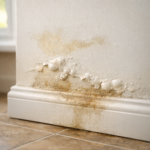
A couple in Hornsby called me last March. They’d noticed a small brown ring on their bedroom ceiling — about the size of a dinner plate. They figured it was from the storms a few weeks earlier and assumed it would dry out on its own. It didn’t. Six weeks later the ring was the size of a coffee table, the plasterboard had started to sag, and when I finally got up there, two valley flashings had completely rusted through and there was active rot in three of the timber battens underneath.
When I asked when their roof was last inspected, the husband looked at the wife. The wife looked at the husband. The house was built in 1987.
That’s not a horror story. That’s a Tuesday for most roofers working in greater Sydney.
Why Sydney Roofs Fail Quietly
Most homeowners think about their roof the same way they think about their liver. It’s up there, doing its job, and they’ll deal with it when something goes wrong.
The problem is that roofs fail quietly. There’s no grinding noise, no warning light. There’s slow, hidden deterioration happening above your ceiling right now, and the first visible sign is usually water appearing somewhere it shouldn’t be.
Sydney’s climate accelerates this in ways most people don’t account for. The UV intensity here degrades pointing compound and ridge capping mortar significantly faster than most temperate climates. Hailstorms crack terracotta tiles without leaving any mark visible from the ground. North-easterly summer storms drive water horizontally under lapped metal sheets in ways that vertical rain never would. And then three weeks of sunshine follows and everyone forgets the storm happened.
By the time you notice the stain on your ceiling, water has typically been sitting in your roof cavity for months — sometimes longer.
What a Real Roof Inspection Actually Involves
There’s a lot of variation in what different operators call a roof inspection, so I want to be direct about what a proper one looks like.
A surface-level assessment from someone standing on your front path, staring upward, and giving you a quote based on what they can see from the ground is not an inspection. A real inspection means a licensed tradesperson physically getting on the roof — or using a drone with a high-resolution camera where pitch or safety makes direct access impractical — and working through the structure methodically.
Here’s what we’re actually checking:
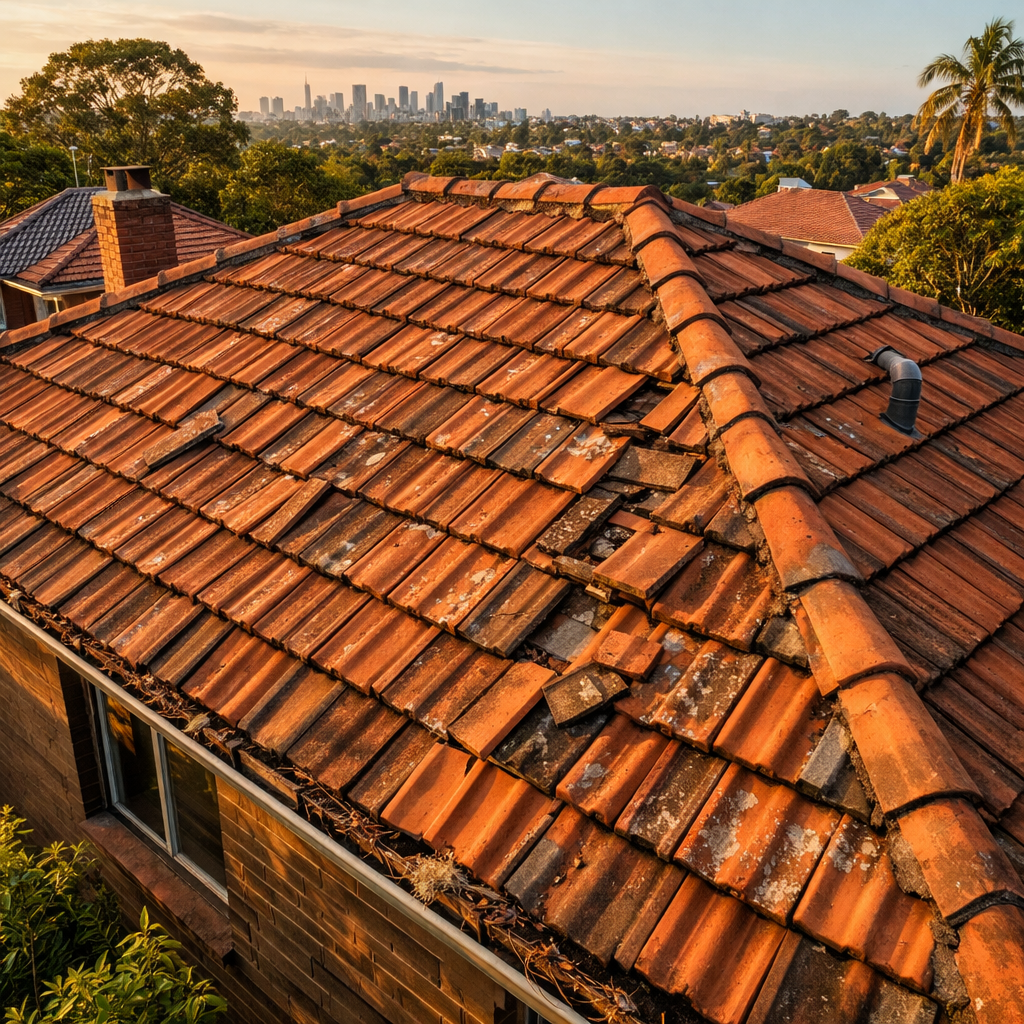
Ridge capping and pointing. The mortar holding your ridge tiles in place is one of the first things to fail on older homes. Once it cracks, water enters and expands the gap further every winter. Repointing is straightforward work. Replacing saturated timber underneath it is not.
Valley flashings and box gutters. These are the most common failure points on Sydney homes built before 2000. Most are made from lead or galvanised iron, and they corrode from the inside out. The surface can look completely intact while the underside is paper-thin and leaking with every rain event.
Tile integrity. Cracked, slipped, and missing tiles are the obvious ones. Less obvious is surface coating degradation — tiles that look fine from the ground but have become porous, absorbing water with every rainfall and significantly increasing the load on the battens beneath them.
Roof penetrations. Every point where something passes through your roof — skylights, whirlybirds, plumbing vent pipes, solar panel mounts, antenna brackets — is an independent failure point. The flashing around each penetration degrades at its own rate and is the source of a significant portion of the leak call-outs I attend.
Gutters and downpipes. Not just whether they’re blocked, but whether they’re correctly pitched, properly connected at the joints, and whether the fascia boards behind them show signs of rot from years of overflow.
Roof structure from below. Where roof cavity access permits, we’re checking for sagging rafters or purlins, water staining on the underside of sarking, signs of animal entry, and any structural movement that might indicate broader issues.
A thorough inspection takes 60 to 90 minutes. What you should receive at the end is a written report with photographs — not a verbal summary delivered from the bottom of a ladder.
The Insurance Angle Nobody Reads Until It’s Too Late
Every year at renewal, your insurer sends documentation with a list of exclusions buried deep in the policy wording. One of the most consistently overlooked is the exclusion for damage resulting from a roof that wasn’t maintained in reasonable condition.
In plain language: if your roof fails and an assessor determines the damage relates to pre-existing deterioration and inadequate maintenance, your claim can be reduced or refused entirely. I’ve been called in after the fact to provide independent reports in exactly these situations. It’s an uncomfortable conversation to be part of.
An annual inspection report, kept on file, gives you a documented maintenance history. It demonstrates that you took active steps to maintain the property in reasonable condition. In a dispute with your insurer, that paper trail has genuine practical value.
There’s also a broader trend worth knowing about. Some insurers are beginning to require roof condition reports for homes over a certain age before renewing at full replacement value. This isn’t universal yet but it’s moving that direction, particularly for homes in hail-risk corridors across Sydney’s north-west and the Central Coast.
If your home is pre-1990 and you’ve never had a written inspection report, it’s worth a conversation with your broker before your next renewal.
After a Storm: The Window Most People Miss
Sydney’s storm season runs roughly October through March, with the most damaging events concentrated in the late afternoon summer months. The pattern I see every year is predictable: a storm hits, everyone’s attention goes to the immediate mess — flooded yards, fallen branches, blocked drains — and the roof inspection goes onto the “should do” list where it stays indefinitely.
Here’s why the timing matters more than most people realise.
Most home insurance policies require storm damage to be reported within a reasonable timeframe. What counts as reasonable varies by insurer and policy, but attempting to connect a water stain discovered six months later to a specific storm event from the previous summer is a difficult conversation to have with a claims officer — particularly without any documentation from the period following the storm.
Getting a licensed roofer up within two to three weeks of a significant weather event gives you a time-stamped written report documenting the roof’s condition in the direct aftermath. If damage is present, you have dated evidence while it’s clearly attributable to a specific event. If there’s no damage — which is also a completely legitimate outcome — you have a condition baseline and genuine peace of mind.
The window isn’t open indefinitely. Acting quickly after a storm isn’t overcaution — it’s just practical.
The Difference Between Older and Newer Sydney Homes
The inspection priorities shift considerably depending on the age of the property, and it’s worth understanding why.
Homes built before 1985 were predominantly roofed with terracotta tiles, galvanised iron flashings, and timber sarking where present. At this age, the mortar work on ridges and hips is almost certainly due for attention regardless of surface appearance. Valley flashings in these homes are frequently at or past the end of their serviceable life. The timber structure beneath should be assessed for any movement or deterioration.
Homes from the late 1980s through 2000 often feature concrete tiles, which are heavier than terracotta and place greater long-term stress on the roof structure. Surface coatings on concrete tiles from this period are commonly degraded, making the tiles porous. It’s also the era when box gutters became more common in certain design styles — and box gutters are one of the highest-maintenance roof elements in any Sydney home.
Colorbond roofs from any era are generally more forgiving but are not maintenance-free. Fastener corrosion, failed sealant at penetrations, and debris accumulation in valleys are the main failure points. Colorbond installed before the mid-1990s used formulations with less corrosion resistance than current product — something worth checking on properties from that period.
Newer homes aren’t immune. Construction defects, inadequately sealed penetrations, and incorrect installation of valley flashings show up in homes less than ten years old. A new build inspection within the first two years — while any builder warranty may still apply — is often the most financially valuable inspection of all.
What To Look For Before You Book an Inspection
A few things worth clarifying before you engage any roofing inspector:
Ask for their licence number upfront. In NSW, roof work requires a contractor licence issued by NSW Fair Trading. Any legitimate operator provides this without hesitation. If there’s any reluctance, move on.
Confirm that the inspection includes a written report with photographs. A verbal debrief at the end of the job — however thorough it sounds — is not a document you can reference later for insurance purposes, property sale disclosures, or repair quotes from other contractors.
If someone contacts you unsolicited after a storm offering a free inspection, understand what that is before you agree. There’s nothing inherently wrong with it, but you’re entering a sales process. Get the findings in writing and get a second opinion on anything significant before committing to work.
Finally, be cautious of inspections that seem rushed. A legitimate assessment of a standard Sydney home should not take fifteen minutes. If the tradesperson is back on the ground before you’ve finished your coffee, ask what they actually looked at.
Why It Keeps Getting Put Off — And Why That Changes
The honest reason most Sydney homeowners haven’t had a roof inspection isn’t cost and it isn’t inconvenience. It’s that the roof doesn’t draw attention to itself until something goes wrong.
Unlike a tap that drips or a door that sticks, a roof in the early stages of failure gives you almost nothing to react to. The deterioration is silent, largely invisible from the ground, and completely removed from daily life until the day it isn’t.
The homeowners I feel for are the ones who were genuinely intending to get it looked at — it just kept getting pushed back by everything else. And then one afternoon they’re standing in their bedroom looking at a stain on the ceiling and that whole calculus changes very quickly.
An annual inspection doesn’t prevent every problem. What it does is catch the problems while they’re still manageable — before a cracked tile becomes a saturated batten, before a rusted flashing becomes a damaged ceiling, before a maintenance job becomes a major repair.
That’s the actual value. Not finding nothing. Finding something small.
This guest post was written by an independent licensed roofing contractor based in Sydney. If you’re looking for a professional roof inspection with a written photo report and upfront pricing across Sydney, the Central Coast or Newcastle, Ontime Tradie offers same-day bookings and attends within 90 minutes. Reach them on 0488 822 795 or through ontimetradie.com.au.